Editor’s Note: NowGeorgia.com crime reporter Kevin Angell is a career law enforcement officer who recently found himself on the streets of Minneapolis on assignment. Here, he shares what he observed and his reaction to it. This is his viewpoint in his words.
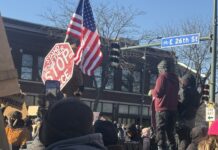
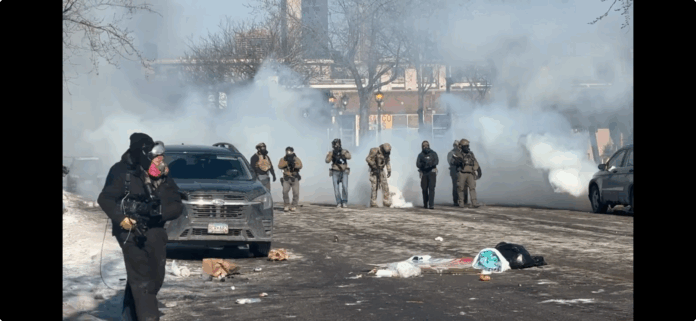
Standing on the frozen pavement of downtown Minneapolis this past Saturday, January 24, 2026, the first thing that hit me wasn’t the tear gas—it was the bitter cold. The second was the realization that what I was seeing didn’t fit neatly into the binary narratives likely to be spun on the morning news.
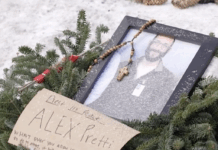
The protests, sparked by the recent shooting, transformed the city streets into a complex ecosystem of grief, rage, organized resistance, and community care. As I moved through the crowds from daylight into the tense hours of the night, I witnessed a scene that was equal parts chaotic and surprisingly regimented.
The logistics of resistance
One of the most striking aspects was the level of professional organization. This wasn’t merely a spontaneous gathering. I watched as six unmarked white rental vans parked just outside the protest perimeter, unloading groups of people who seemed to know exactly where they were going.
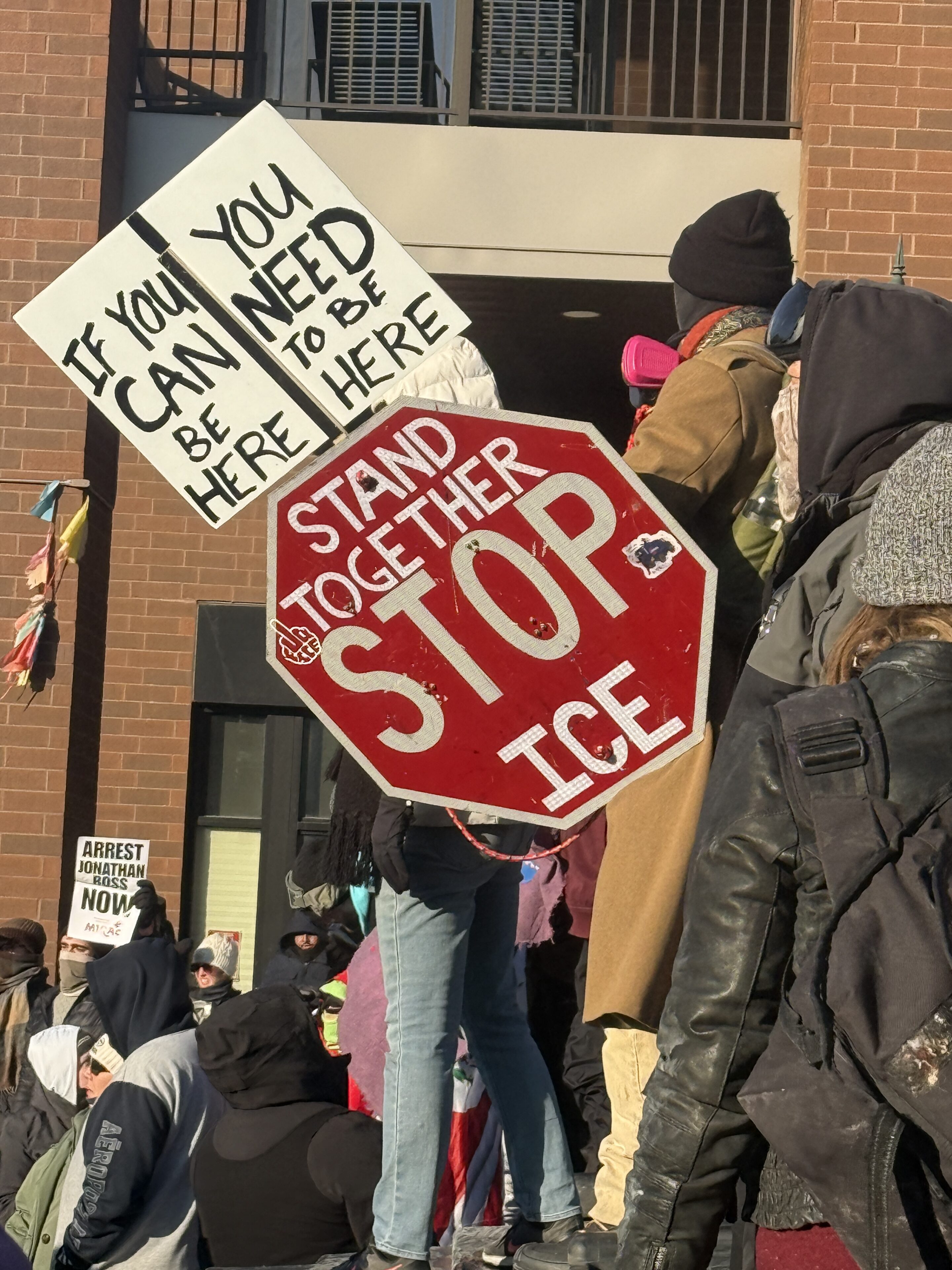
The infrastructure of the protest was undeniable. There were pallets of firewood delivered to keep people warm, and vehicles circling with signs reading “Snacks, Water, First Aid.” I saw men carrying stacks of Little Caesars pizza boxes, and even the donut shop where the shooting occurred handed out donuts to the crowd. Everywhere I looked, there were professionally printed signs and pamphlets.
A significant portion of the demonstrators arrived prepared for tactical engagement. They wore gas masks and reflective vests, communicating via two-way radios. It felt less like a riot and more like a mobilized operation.
Barricades and escalation
The streets themselves were reshaped to serve the protest. Demonstrators dragged residential trash cans, commercial dumpsters, and outdoor dining furniture into the roadway to create barricades. Graffiti tags appeared rapidly—”F#%^ ICE,” “Rise and Unite,” “Our Streets”—marking the territory.
Yet, despite the tension, I did not witness a single business being looted or destroyed. I saw one burned-out vehicle with Wisconsin plates, though I do not know how the fire started. The focus seemed to be on holding space, not destroying property.
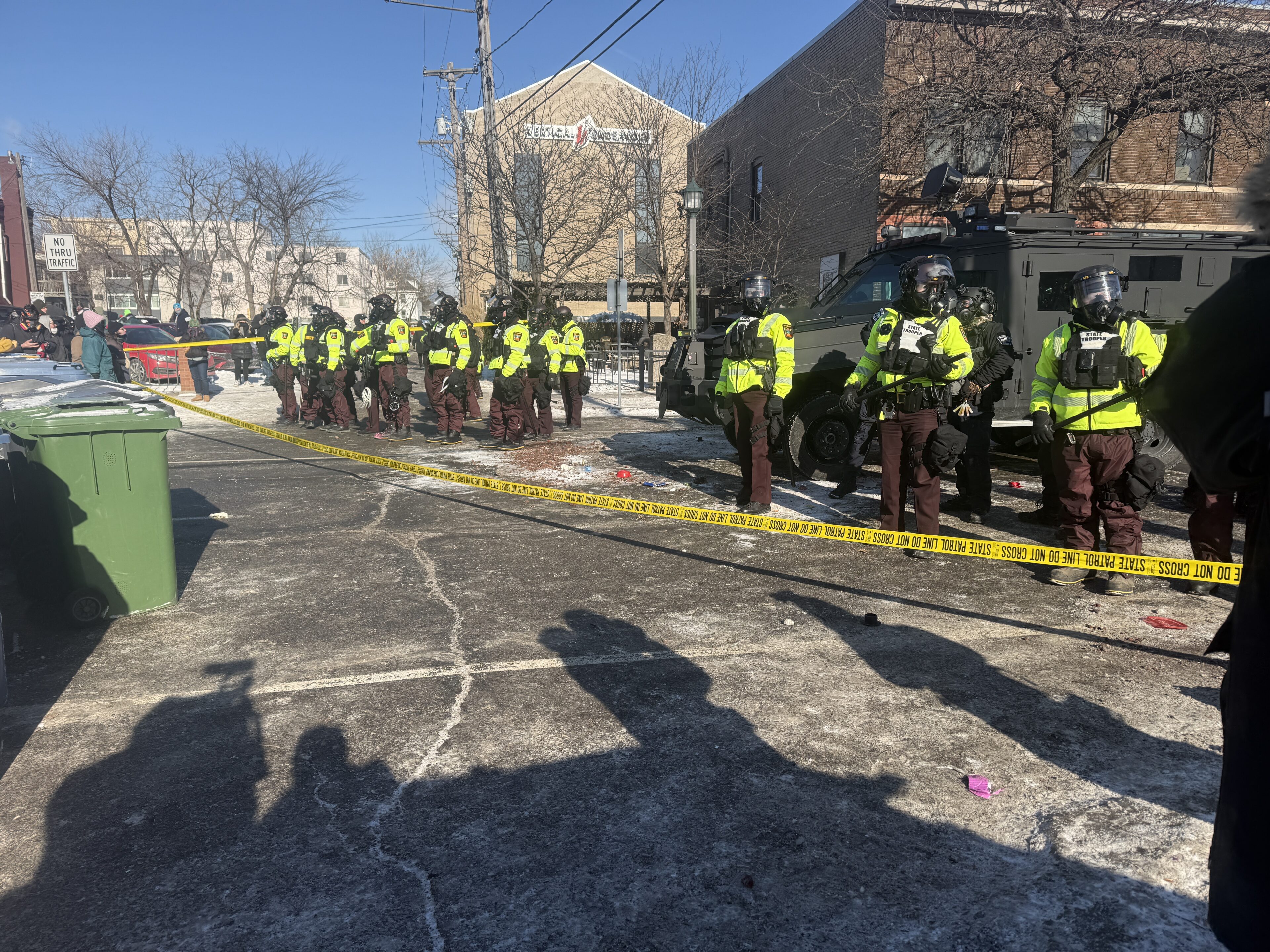
The conflict with law enforcement followed a grimly predictable script. Police issued clear, booming commands over loudspeakers, declaring the assembly unlawful and warning that chemical irritants would be deployed if the crowd didn’t disperse within a set time. True to their word, when the clock ran out, the air filled with tear gas, pepper balls, and the concussive boom of flash bangs. I watched an armored BearCat crush a mattress as it breached the police line.
I was personally caught in the crossfire, exposed to tear gas three times and struck on the left side of my face by a projectile. Despite the aggression on both sides—demonstrators throwing glass bottles and frozen water bottles while screaming at officers to “kill themselves”—I did not observe any serious physical injuries to either protesters or police.
A tale of two cities
My experience was defined by a stark contrast between day and night. During the daylight hours, the atmosphere was almost communal. After the police pulled back, protesters were courteous, offering me snacks and smiling as they passed. Families even brought young children to the scene.
But as the sun set, the mood shifted. Paranoia set in. Under the cover of darkness, my presence became a point of suspicion. I found myself surrounded by a group demanding to know if I was a federal agent. Whistles blew, summoning more demonstrators to encircle me. The welcoming community of the afternoon had hardened into a defensive, suspicious force at night.
The aftermath
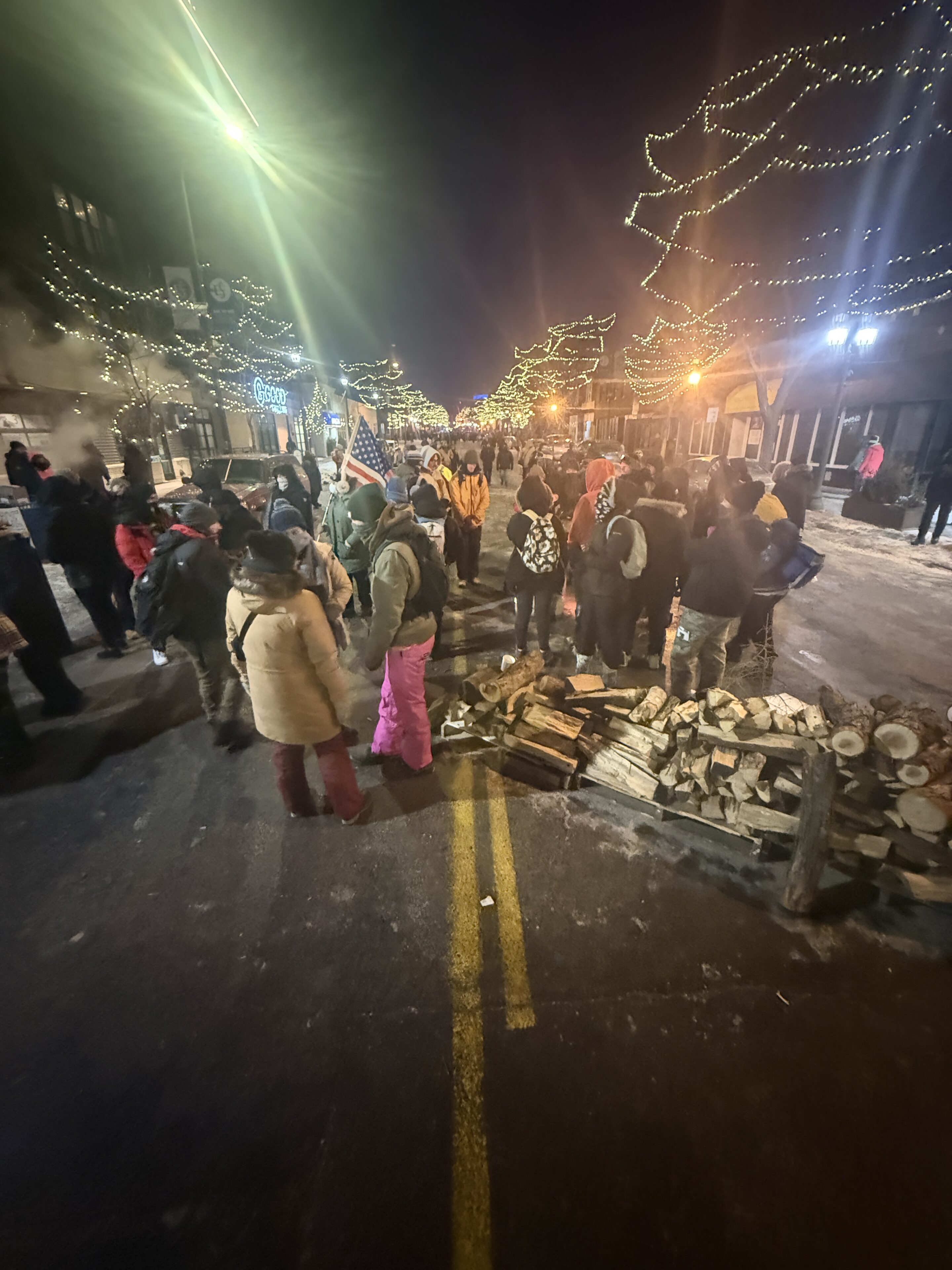
After a candlelight vigil a few blocks away, a new wave of demonstrators flooded the area around 8 p.m. Street fires were lit, not for destruction, but for warmth and as focal points for gathering.
As I walked away from downtown, the air still stinging my eyes, I was left with a complicated picture. There was profanity, aggression, and tactical maneuvering. But there was also mutual aid, restraint regarding local businesses, and a palpable sense of shared purpose.
As my night came to an end, there didn’t appear to be a significant danger to life or widespread property destruction. Instead, there was a stalemate—a city frozen in conflict, waiting to see what the morning would bring.