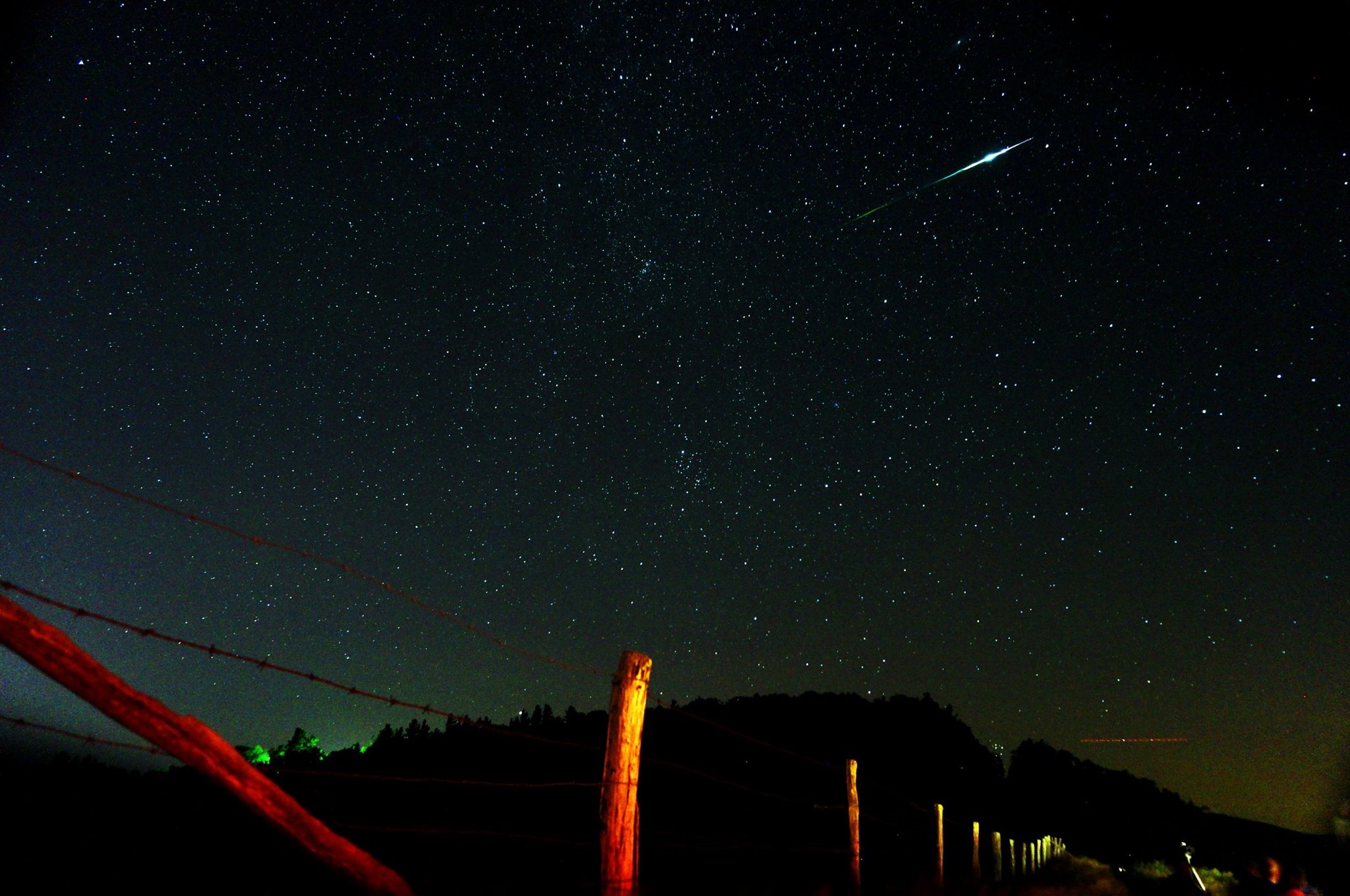
There are numerous meteor showers throughout the year, but one stands above all the rest: the Geminids. They are expected to peak across the Northern Hemisphere on Saturday and Sunday nights, December 13th and 14th. This year’s shower promises to be a great one with an only 30% full moon hindering the viewing.
The Geminids are a fairly new shower, first observed by R.P. Greg in Manchester, England, in 1862. During the first few years of its existence, the shower only produced a handful of meteors, but by the turn of the century, 20-30 meteors per hour were observed. Since then, the shower has continued to strengthen, with over 100 meteors per hour recorded regularly since the early 2000s.
I observed over 300 meteors in just three hours outside Dahlonega at the North Georgia Astronomical Observatory in the great shower year of 2014. That year, like this one, there was an extended period without moonlight which enhanced the celestial show.
A peculiar origin
The Geminid Shower is quite peculiar in its origin, which was not fully understood until 1983. That’s when astronomers found an asteroid that followed the same orbit as the observed meteors. This asteroid was eventually given the name 3200 Pantheon and is the only asteroid known to cause a meteor shower. The fact that this shower comes from an asteroid creates the numerous “fireball” (very bright) meteors that are observed.
The good news for 2025 is that it is another exceptional year to view this meteor shower. The moon is only 30% full, which means it won’t rise until the early hours of the morning.
This year you should easily be able to see 40-60 meteors per hour from a dark sky site. The farther away from city lights, the better the show will be. In perfect conditions, over 100 meteors per hour may be seen. I’ve personally watched this shower from the parking lot at Brasstown Bald, Richard Russell Highway and the UNG Observatory over the years.
Best viewing times
You should be able to see the meteors anytime after dark. This year’s peak is expected to occur around 10PM on Saturday night.
The radiant in the constellation Gemini will reach its highest point in the sky around 2 a.m., which is generally when rates will peak locally, but the whole night should be fantastic. You can easily find the radiant this year as the very bright planet Jupiter will be nearby. You don’t have to have a view of the radiant to see the meteors, but they will all trace back towards it. Also, don’t worry if you have to be up early for work and can’t stay out that late; you can still see plenty of meteors even as early as 7-8 p.m. thanks to the early sunsets.
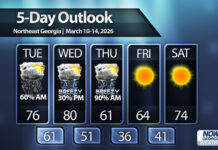
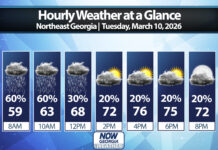
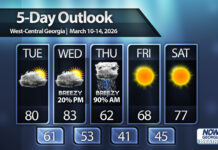
If you do head outdoors to watch the meteor shower, bundle up -it’s going to be a bit chilly. Fortunately the extreme cold won’t be in until Sunday, but temperatures will still fall into the 40s after dark. Current weather models are showing increasing clouds, but there should be periods of plentiful clear sky to catch some of the shower before we really cloud up after midnight.
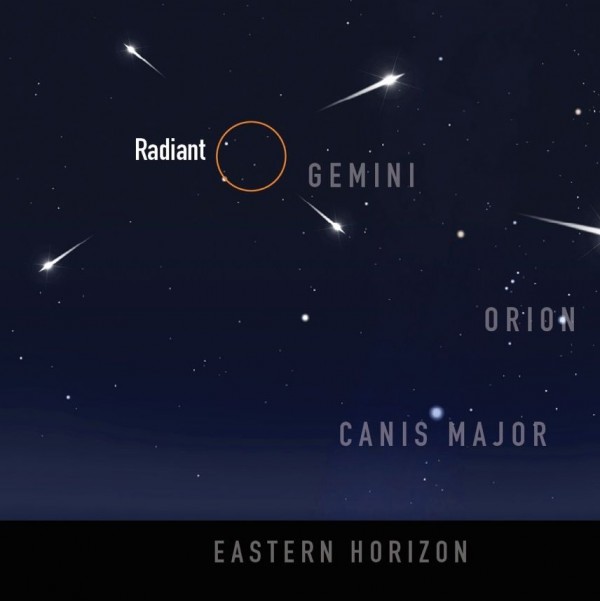
You don’t have to have a view of the radiant to see plenty of meteors, but the eastern parts of the sky will see the highest meteor count.
So, grab a coat or a sleeping bag and get outside to enjoy this spectacular event!